
“What’s a joint venture?” “What’s a playa?” and “What exactly do you do?” These are a few common questions we hear. Let’s start with a joint venture, what that means in reference to us, and what we do. If you want an answer to the playa question, head over to the playas section.
Our role is to facilitate communication and coordination among the partners, provide science-based information and tools, and remove roadblocks to conservation.
Playa Lakes Joint Venture (PLJV) is a non-profit organization dedicated to conserving the playas, prairies and landscapes of the western Great Plains to benefit birds, other wildlife, and people. We are one of 25 migratory bird joint ventures that work to build a healthy world for birds, other wildlife, and people. If you look at the link above, you’ll see they cover the entire United States as well as parts of Canada and Mexico. Most of those joint ventures, like PLJV, are habitat-based and address the bird habitat conservation issues found within their own geographic area, while a few have an international scope and are focused on a specific species.
Like all migratory bird joint ventures, we are a partnership organization. We have a small staff that brings together and supports a large regional partnership of federal and state wildlife agencies, conservation groups and private industry — many of which you’ll see represented on our management board. Each partner has a piece of the puzzle when it comes to conserving bird habitat, and they often focus on a specific aspect of conservation — geography, habitat type, or bird species, for example.
Our role is to facilitate communication and coordination among the partners, provide science-based information and tools, and remove roadblocks to conservation. Our goal is to help everyone be more efficient and effective at delivering on-the-ground conservation that benefits the people and wildlife of this region.

OUR VISION
Birds are an integral part of our environment and are essential for the health and beauty of our world. We envision a future when the ecosystems within our region sustain birds and other wildlife in concert with humans and our activities.

OUR MISSION
To conserve the playas, prairies and landscapes of the western Great Plains through partnerships for the benefit of birds, other wildlife, and people.

OUR PURPOSE
PLJV finds and executes partner-based solutions to conservation challenges.
Our Landscape
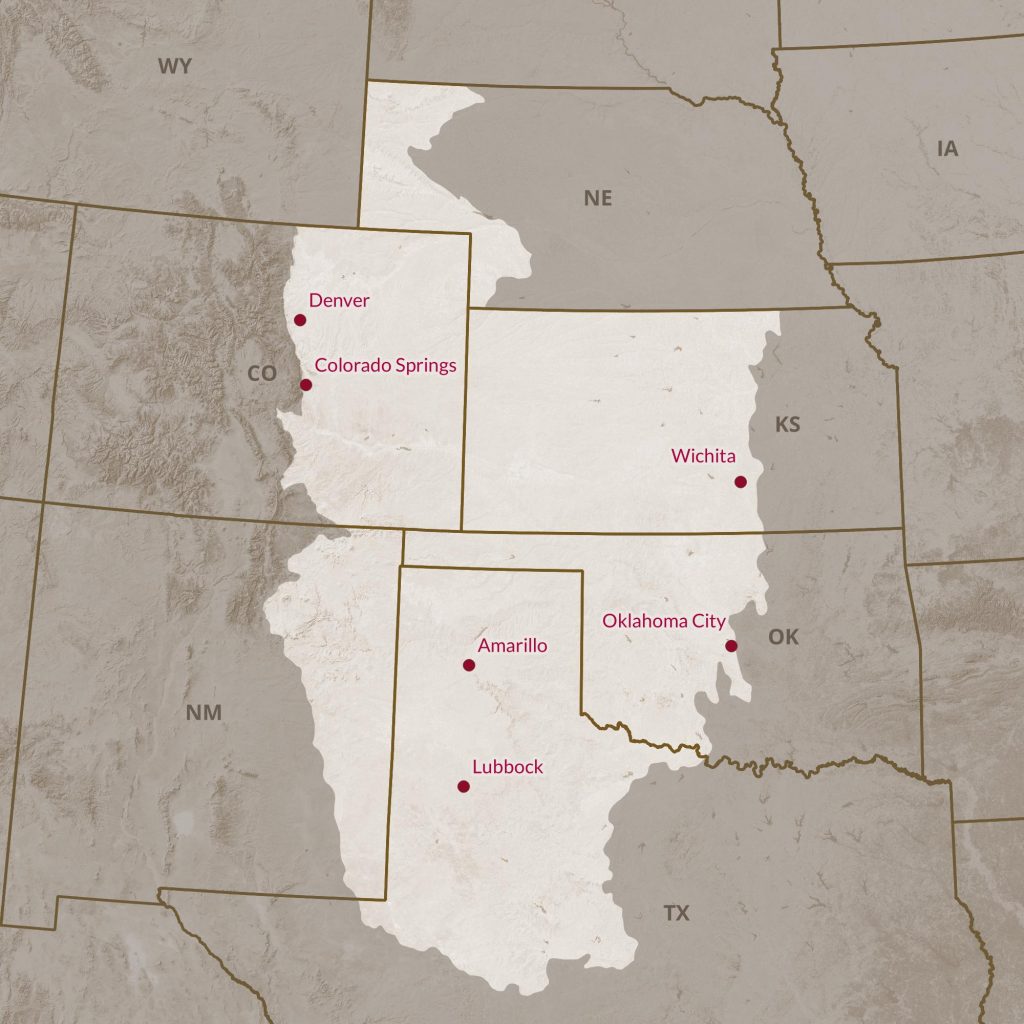
The PLJV region encompasses the short- and mixed-grass prairies of the western Great Plains including portions of Colorado, Kansas, Nebraska, New Mexico, Oklahoma and Texas. This area includes a diverse landscape with unique habitats that support a variety of birds and other wildlife, as well as the people who live and work here.
While there are urban areas, the region is almost entirely rural, with 97% of the land privately owned. Much of that is working lands, with cropland and rangeland dominating the landscape. Besides farming and ranching, this landscape supports dairies, advanced manufacturing and renewable energy. Hunting, fishing, and other recreational activities are also an important part of life in the western Great Plains.
Our Team
Our staff is fairly small, but our conservation team is much bigger! It includes the many talented people who work within the various organizations that make up our partnership. Our work supports them in their work, and together we are able to make a bigger impact.
Although we can’t highlight all our partners here, you can learn about the people who make up our core PLJV team — our staff, management board members, and science advisors.
Our Work
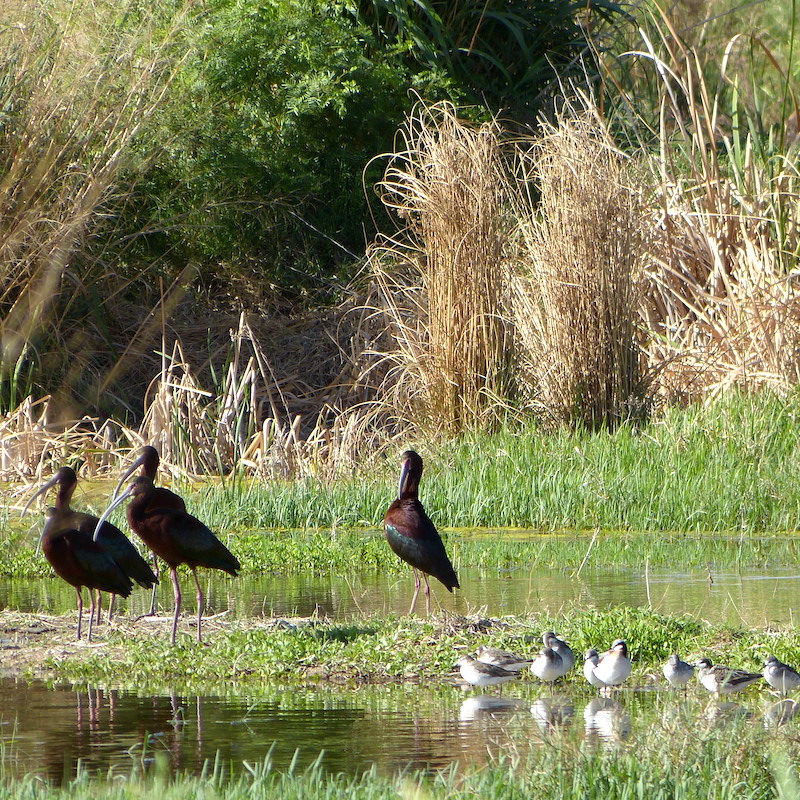
As a migratory bird joint venture, we work to ensure that all birds have a home. That means maintaining a balance of habitat types to support landbirds, waterbirds and waterfowl, and shorebirds. Like people, birds have different requirements for where they live. From grasslands and shrublands to various types of wetlands, each habitat plays an important role in providing a home for the many species of birds — and people — that depend on this landscape.
Our work is guided by a conservation implementation plan which describes the current landscape and projected changes, lists the projects being implemented in each state with associated acres conserved, and tracks progress toward our habitat goals.
Our Commitment to Diversity, Equity and Inclusion
Our mission to conserve the playas, prairies and landscapes of the western Great Plains includes all people of our region, and we must make a place for everyone within our work. As an organization, we are committed to making continual, measurable progress toward a just, equitable environment within our organization, our larger partnership, and the communities we serve.
We welcome the addition of differences in opinions, culture, beliefs, ethnicity, nation of origin, languages spoken, race, sex, gender identity and expression, sexual orientation, age, religion, disability, and education.